A few things about this list, and my process.
- I tremble under the iron boot of introductions – as such, abruptness will be a recurring feature.
- The list is dynamic. At present, it reflects my assessment of these players when last seen, with no arbitrary age-based regression quotient. It will be updated, with thorough associated apologia, not a moment sooner (or later) than that exact epiphanic one in which I observe my mind moved.
- These are not power rankings, by which I mean they are not intended to register who is playing the best at any given moment. If Jordan Poole starts the season averaging 37/5/5 on 77% TS, it ought not be your expectation that he hijacks, gatecrashes, or elsewise deflowers this (for the time being) self-respecting list. Put plainly, the rankings articulate the twenty players, in order, that I believe (in a semi-vacuum) contribute the most towards winning (playoff) basketball games.
- Establishing uniform criteria for such a list is notoriously impractical. Still, I will offer a limp circumference within which to confront its contents.
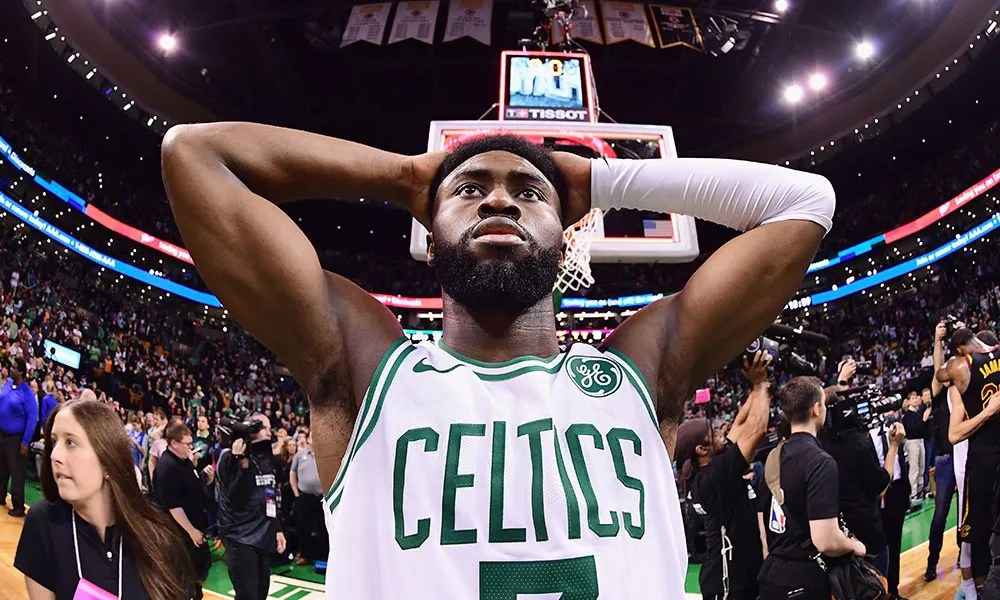
- Efficiency is king. The median offensive rating for an NBA team in the 2022-2023 season was 115.0, ten points higher than the 105.0 median league offensive rating just ten years ago. Owing to this, the standards for generating value as a scorer have been raised dramatically. Michael Jordan himself owns a 56.8% career True Shooting Percentage, a mark lower than the 58.5% TS collectively achieved by the 2022-2023 Washington Wizards, who went 35-47. Jordan Clarkson, nobody’s idea of a pantheon legend, matched ‘91 Drexler shot for shot last season – both players posted 21 PPG on 56% True Shooting. The why/how of modern offensive dominance is a conversation for a different article… for my two cents, the changes are attributable to the marrying of unprecedented skill sets across all five positions (thanks in part to the influx of international talent) with a comprehensive strategic revolution, but there is a limitless smorgasbord of perspectives to be had. Regardless of how you contextualize it historically, the current reality must be reckoned with, which entails a total recalibration of the efficiency threshold for legitimately generative scoring. To enlist a concrete example, Jaylen Brown is a player who, for these reasons, I evaluate less favorably than consensus. In 2022, Brown scored 27 PPG on 49/33/76 shooting splits, which amounted to 58% True Shooting on a Boston Celtics team that won 57 games and recorded a team-wide 60.0% True Shooting. The analysis goes deeper than pure apples to apples; I understand that Brown’s ability to create his own shot is an important buoy for the Celtics’ occasionally stagnant half-court offense. Still, there are many possessions on which Jaylen is taking shots which are less efficient than those likely to be generated by the offense in its natural procession without him, and, in sum, his scoring prowess is insufficiently effective to generate significant gravity or drive value to the extent suggested by his selection for Second Team All-NBA. None of this is to discuss his issues with ball security, limitations as a passer, or imperfections defensively, all of which contribute to him being graded outside the top 50 players in the league in the most trusted impact metrics (EPM, LEBRON, etc). To stop picking on Jaylen Brown for a moment, it is harder than ever to drive superstar-level impact as a pure scorer, and the list will reflect that.
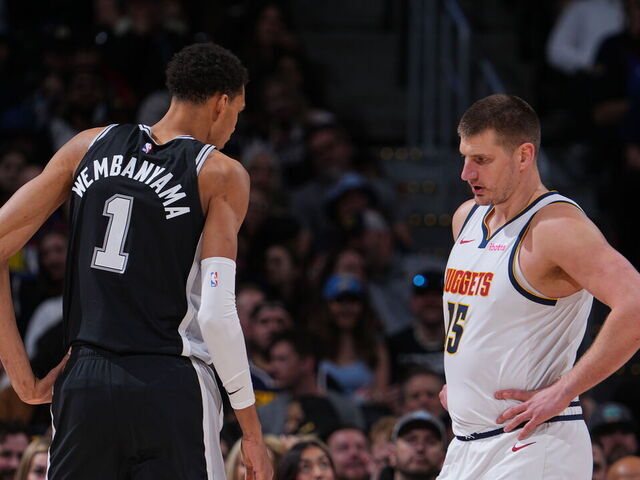
- All skills matter, and the ways in which a player’s presence on the floor alters the geometry of the court for opposing defenses are critical in understanding the fullness of their value. That which is undocumented is not unseen. It’s widely understood that when Giannis touches the ball, the entire defense must constrict towards the paint in order to prevent him from getting to the rim at will. This constriction opens significant space for the players around Giannis to shoot from outside, an effect which may not always result in an assist for him specifically, but which nonetheless results in his team producing far better offense every minute he is on the floor. Such an effect is present or absent, to varying degrees, for all great players in the league. Jokic’s brilliance as a passer affords him increased space as a scorer. Steph Curry’s lethality as a shooter and movement away from the ball frees up opportunities for his teammates to get to the rim. Imposing, monstrous interior scorers like Joel Embiid and Anthony Davis create the threat of untenable mismatches which the defense must make sacrifices on every action to avoid. The same phenomena exist on defense, too. Terrifying rim protectors like Brook Lopez, Rudy Gobert, and (soon to be) Victor Wembanyama suppress attempts at the rim, liberating their comrades on the perimeter to exercise greater levels of aggression when pestering ball handlers, chasing around screens, and closing out to shooters. Likewise, poor shooters limit driving lanes for teammates, poor passers find themselves with less space for their own scoring, and poor defenders surrender constant advantages which hamstring the flexibility and potency of the entire system around them. AIO Analytics tend to do a solid job in my estimation of picking up on these pulses in the regular season, but small sample sizes in the postseason mean I will have to deploy my own judgment to a significant degree, particularly because these effects appear (to me) to be titanically amplified over the course of a playoff series.
- Size matters. This is not a pound-for-pound exercise. Kyrie Irving indeed dazzles on a level tantamount to profound visual artistry, but he is 6’2 and 195 pounds, a coyote in a jungle full of dinosaurs. Mitchell Robinson operates in the absence of any observable basketball skill, yet achieves substantial results by means of pure, elephantine enormity on the glass and at the rim. The rim is ten feet in the air, it helps to be large.
- As between players who excel at floor-raising in a limited offensive environment and players who best supplement championship-level teammates, I *slightly* lean toward the former. The model of heliocentrism, systems in which one legendary player initiates the bulk of his team’s offense while role players orbit around him (usually at the three-point line) waiting for passes, has ballooned in prevalence to accompany unique talents like Lebron, Luka, Jokic, Giannis, and even prime James Harden. There is heated debate about how to assess statistics compiled in such a context – they are unquestionably ‘inflated’ due to the gargantuan usage rates, but ought a player be punished for having the requisite skills to be an offensive system unto himself? That, too, feels wrong, so suffice it to say that I consider usage% when evaluating a player’s statistical profile and see value in many approaches to offense, not merely ball dominance.
- Assessing playoffs vs Regular Season data. For players who have extensive playoff resumés, I will index heavily on their playoff box score numbers. Playoff series often contain insufficient data to generate reliable evaluations in the one-number metrics, so those will almost strictly be used for evaluating players in the regular season. For individuals with limited or zero playoff experience, I will offer thoughts as to how I imagine their games would translate to a playoff environment.
- I do not play armchair psychologist, and you will never hear me critique a player for having (or not having) the ‘clutch gene.’ It is my adamant hypothesis that the phenomenon we experience as clutchness is, in almost all cases, best explained by the specific tactical realities of fourth quarter basketball which lend themselves toward a particular archetype of player. This is going to be a longer explanation, so bear with me. Clutchness is often boiled down to the following question: “Who do you want taking the final shot?” The theory, I suppose, is that all the best players in the league are to some degree prolific scorers, so the factor which differentiates them with the clock winding down comes down to who is or isn’t afraid of the moment. This is fundamental gobbledegook. The truth of the matter is that these moments in a game call upon, to quote Liam Neeson, a very particular set of skills – isolation scoring, or more specifically, proficiency at making difficult, contested shots. Examine, for instance, the classic circumstance in which the game is tied with less than 24 seconds remaining, meaning the shot clock is turned off. Essential game theory dictates that you must ‘hold for the last shot,’ which, as should be glaringly obvious, carries with it massive disadvantages. You can’t run your normal offense, because normal offense is not calibrated to create the open shot only once there are precisely 2 seconds remaining. This diminishes the impact of great off-ball scorers and cutters. You can’t, or at least ought not in most cases, drive and kick, because the moments at which shots may be attempted are separated by the time it takes for the pass to travel through the air. Follow me on this, because it is a critical point. If Lebron James is dribbling the ball at the top of the key in this scenario, call it 104-104 with 11 seconds left, he is left with two bad choices. If he waits to drive to the hoop until time is expiring, he forfeits the option of passing out of the drive, as time would run out before his teammate could comfortably catch and shoot (in many cases). This predicament is what allows four or five defenders to collapse into his driving lane, a strategy which is only viable in the last two seconds of the game but which nevertheless renders Lebron’s shot attempt at the rim nearly impossible. If he instead drives to the rim earlier in the possession, say with five seconds remaining, then he is left with a similarly agitating predicament, because he cannot take the layup without leaving several seconds on the clock and relinquishing the enormous edge in win probability that comes with taking the final shot. This conundrum hopefully helps to illuminate some of the confusing optics on Lebron’s approach to these situations. When he does drive to the hoop, he tends to do so with several seconds remaining and pass out of it, anticipating (often correctly) that the defense will crash toward the rim and open up his teammates in the corner. On other occasions, he simply dribbles the air out of the ball and then fires off a stationary three at the last second. Lebron gets perpetually lambasted for these decisions, but they are absolutely optimal from a game theory perspective, and speak more to the incompatibility of ‘drive and kick’ offense with ‘hold for the last shot’ scenarios. His (slightly) diminished potency in these moments has absolutely nothing to do with ‘fear of the moment’ or ‘mamba mentality’ and quite everything to do with the reality that the strategy he uses to dominate basketball games for 47 minutes and 36 seconds happens to be concretely neutered by the practical constraints of getting the ball last. This point applies not merely to Lebron, but to all offensive engines who specialize in ‘drive and kick’ – James Harden and Giannis Antetokounmpo immediately come to mind. What we are left with is to search for individuals who can comfortably dribble out the clock on the perimeter before creating space within a two-second window to get a shot off that they are capable of converting at a relatively high percentage. Centers and bulkier forwards typically don’t have the requisite handle or pull-up jumper to meet our needs, so cross them off the list (again, having nothing to do with mentality or clutchness). Smaller guards are excellent at creating space off the dribble, but they lack the ability to combat a last-second double team or high-level contest, since they cannot rise up and freely either shoot/pass over the defenders. This leaves large guards and slimmer forwards, ‘scoring wings,’ as the players whose skills are most compatible with these so-called clutch moments. Unsurprisingly, the players heralded as the clutchest of all time fit this mold exactly – Michael Jordan, Kobe Bryant, Jerry West, etc. Anyone else remember the “Khris Middleton is the Batman to Giannis’ Robin” conversations from 2021? In sum, I posit that not only did the success (or perceived success) of these players have more to do with their skills than their attitude, but that we as a basketball public drastically overvalue the players who fit this mold. Points scored in the first 46 minutes of a game are worth just as much as points scored in the final 2 minutes of a game, and the overwhelming majority of NBA games are decided before the final possession. There will be several players (Jaylen Brown, Brandon Ingram, Kyrie Irving, Anthony Edwards) who I may appear to underrate for this reason, so I hope the explanation was at all salient.
I could probably go on forever. Raw rebounds per game, for example, are of minimal importance to me (more on this in a prior article). But I must stop. There will be further elaboration within the player paragraphs, so it is time to end this prologue. I do not hate your favorite player! I am trying my best to be objective here, but I of course have biases and rooting interests and will disclose those to the best of my ability. I will also be specifying tier gaps, as well as ranges of rankings I find reasonable. Enjoy!
: )
 The Crux